Ledger vs Trezor: Which Is Better and Safer in 2026?
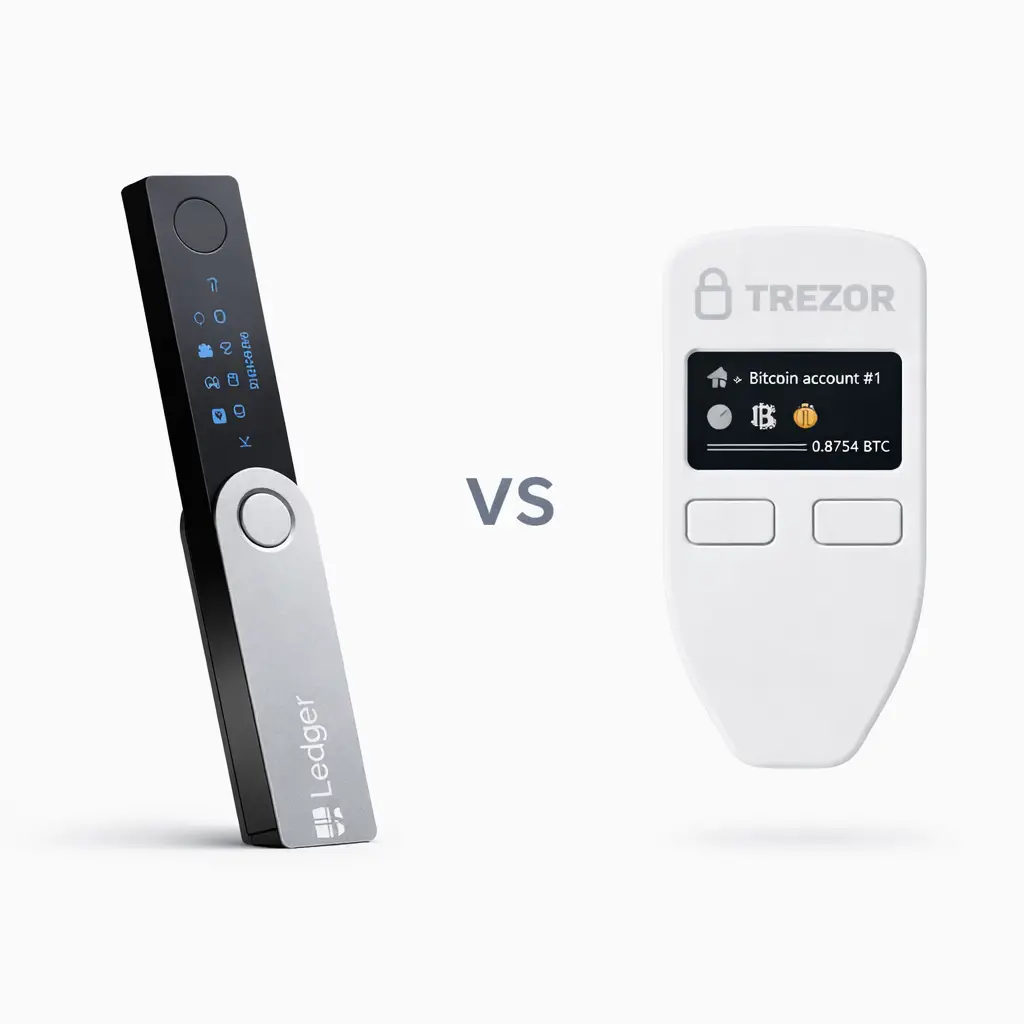
Ledger and Trezor are still the two hardware wallet brands most buyers compare first. Both are designed to keep private keys offline, but they take different approaches to usability, transparency, pricing, and long-term device experience. This guide explains which brand is better for beginners, long-term holders, comparison shoppers, and users who care most about security trade-offs.
Quick Answer
Ledger is usually the better fit for buyers who want broader coin support, lower entry pricing, and a more mainstream app experience. Trezor is often more appealing to users who prioritize open-source transparency and a more alternative security philosophy. The safer choice depends less on the brand name and more on how you buy, set up, verify, and back up the device.
Why Buyers Choose Ledger
- Broader mainstream coin and token support
- More familiar app ecosystem for many users
- Lower-cost entry points like Nano S Plus
- A clearer product ladder from value picks to premium devices
Why Buyers Choose Trezor
- Stronger appeal for open-source-minded users
- Good fit for buyers comparing security philosophies
- Often preferred by users who want a clearer alternative to Ledger
- A stronger pull for buyers who value transparency as part of trust
Ledger vs Trezor Is Really a Comparison of Priorities
This is not just a brand battle. It is a decision about which trade-offs fit your buying style and security habits better.
Many comparison pages make this decision sound simpler than it really is. They reduce the question to one brand being “safer” or “better” without explaining what actually matters in practice.
In reality, most buyers are deciding between different priorities: broader ecosystem support, lower cost, open-source transparency, interface style, and how confident they feel using the device over time.
That is why this page focuses on real use cases. Some readers want the easiest mainstream experience. Others care more about security architecture or philosophy. Others are simply deciding which brand is the better long-term fit before moving funds off an exchange.
If you are still comparing the wider market, read Best Hardware Wallets. If you already know you want Ledger but are unsure which model to buy, go next to Best Ledger Wallet.
Ledger vs Trezor Quick Comparison Table
This table is designed to help buyers compare real differences instead of reading long feature lists without context.
| Feature | Ledger | Trezor | Why It Matters |
|---|---|---|---|
| Security Model | Secure element approach on many devices | Stronger open-source transparency focus | Some buyers prioritize hardware protection, while others care more about auditability and transparency. |
| User Experience | Mainstream app ecosystem and familiar Ledger flow | Often preferred by users comparing alternative workflows | Daily device confidence matters because hardware wallet security only works when users operate the device correctly. |
| Coin Support | Usually broader support across major assets and many tokens | Good support, but buyers often compare specific asset needs more carefully | If you hold more than BTC and ETH, compatibility can heavily influence the decision. |
| Price Range | Strong entry points like Nano S Plus | Often compared more in the mid-to-premium range | Some buyers simply want the strongest value path into cold storage. |
| Beginner Fit | Often easier for buyers who want a more mainstream start | Better fit for users who already care about the philosophy side of the decision | The best beginner wallet is usually the one that feels easiest to set up safely and use correctly. |
Which Is Safer: Ledger or Trezor?
The answer depends on what kind of risk you are focusing on.
Hardware Security
Ledger is often favored by buyers who want a stronger hardware-focused security model and who are comfortable trusting Ledger’s overall device approach.
Transparency
Trezor is often favored by users who care more about open-source visibility and who see transparency as a core security advantage.
Real-World Risk
For most ordinary users, phishing, fake apps, poor recovery phrase handling, and unsafe buying sources create more risk than the headline architecture debate.
What Matters Most in the Real Buying Decision
Coin and Token Support
Ledger is often the easier recommendation for users who want broader asset flexibility and do not want to overthink compatibility before buying.
Price and Value
Ledger’s range gives many buyers a clearer value ladder, especially if they want a strong lower-cost entry into hardware wallets.
Brand Philosophy
Trezor usually becomes more attractive when the buyer is not just comparing hardware, but comparing security philosophy and trust assumptions.
What Most Buyers Are Actually Deciding
Under the surface, this comparison is usually about comfort, trust, and how much friction you are willing to accept for your preferred security model.
Why Ledger Often Wins for Mainstream Buyers
Ledger usually feels easier to recommend when the buyer wants a clearer path from entry-level hardware storage to more premium device options without leaving one broader ecosystem.
It also tends to be the easier answer for users who want a more familiar app experience and who do not want their buying decision to start with a philosophy debate.
Why Trezor Often Wins for Philosophy-Driven Buyers
Trezor becomes more compelling when the buyer cares deeply about transparency, trust assumptions, and how the brand approaches security at a broader level.
For some shoppers, that matters more than the broader mainstream appeal, lower entry pricing, or wider asset flexibility that often make Ledger easier to recommend.
Who Should Choose Ledger?
- Buyers who want broader mainstream asset support
- Users who prefer a more familiar and widely discussed ecosystem
- Value-focused buyers who want a lower-cost path into cold storage
- Readers who are more likely to buy a Nano S Plus, Nano X, Flex, or Stax after comparing models on one brand path
- People who want a more straightforward recommendation without overcomplicating the brand decision
Who Should Choose Trezor?
- Buyers who care strongly about open-source transparency
- Users who want a clearer non-Ledger alternative before deciding
- Comparison shoppers who care more about philosophy and trust model than broader mainstream positioning
- Readers who are willing to prioritize brand approach over simpler mass-market convenience
- Buyers who want their decision to align more closely with transparency-first preferences
Who Should Avoid Ledger or Trezor?
Who Should Avoid Ledger?
Buyers who are uncomfortable with Ledger’s overall trust model, or who strongly prefer the open-source side of the debate, may feel better with Trezor even if Ledger looks stronger on convenience or broader support.
Who Should Avoid Trezor?
Buyers who mainly want broader mainstream convenience, easier brand familiarity, or a clearer lower-cost Ledger entry path may find Trezor less compelling for their actual needs.
What Matters More Than Either Brand Name
- Buy only from trusted sources
- Initialize the device yourself
- Never trust a pre-written recovery phrase
- Store the recovery phrase offline and securely
- Use only official wallet software and verified documentation
- Slow down and verify what appears on the device before approval
What This Comparison Often Gets Wrong
It Overstates Brand Debate
Many buyers spend too much time trying to declare one winner and not enough time thinking about safe buying, setup discipline, and backup habits.
It Understates User Error
The biggest real-world losses usually come from phishing, bad recovery phrase handling, or careless approvals, not from a simple “Ledger vs Trezor” headline outcome.
It Ignores Long-Term Fit
A wallet can look good on paper and still be the wrong fit if you dislike the workflow, do not trust the brand approach, or never feel fully comfortable using it over time.
Ledger vs Trezor FAQ
Is Ledger safer than Trezor?
Not in a simple universal way. Ledger and Trezor reflect different security priorities. For most ordinary users, safe buying, proper setup, and recovery phrase handling matter more than choosing a winner based only on a headline security claim.
Is Trezor better than Ledger for beginners?
Usually, Ledger is the easier recommendation for buyers who want a more mainstream starting point, while Trezor is often more appealing to users who already care about open-source transparency before they buy.
Which is better for long-term cold storage?
Both can work well for long-term cold storage when used correctly. The better choice depends on whether you care more about Ledger’s broader ecosystem and value ladder or Trezor’s transparency-focused appeal.
Should I choose Ledger or Trezor for altcoins?
Ledger is often the easier recommendation for buyers who want broader mainstream altcoin and token support, but you should still verify support for the exact assets you hold before buying either one.
What matters more than the Ledger vs Trezor debate?
Buying from a trusted source, initializing the wallet yourself, storing your recovery phrase correctly, and avoiding fake apps or phishing links matter more than many users first expect.
Which brand is easier for mainstream users?
For many buyers, Ledger feels easier as a mainstream starting point because of its broader product ladder, stronger familiarity, and clearer value options across different price levels.
Which brand is better if I care about transparency?
Trezor is often the stronger draw for users who place transparency and open-source visibility near the top of their trust decision.
Our Final Verdict
Choose Ledger if you want broader mainstream support, lower-cost entry options, and a more familiar ecosystem for everyday crypto storage. Choose Trezor if you care more about open-source transparency and want an alternative security philosophy before committing to a hardware wallet brand.
For most users, the better decision is not the brand that sounds best in a debate. It is the wallet you are most likely to buy safely, set up correctly, back up properly, and continue using with confidence over time.